Psychology
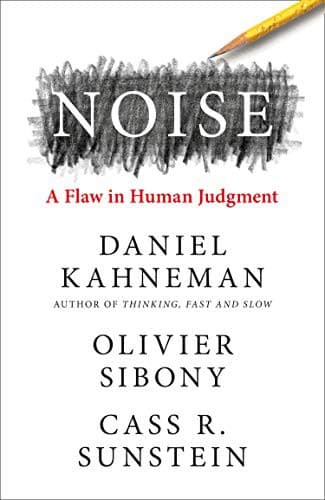
Noise
Daniel Kahneman, PhD, Olivier Sibony, PhD, Cass R. Sunstein
3.7 (32000) 8 min read 5 key ideasPremium
Behavioral economists identify 'noise' — unwanted variability in human judgment — as a pervasive, underexamined source of error distinct from bias.
Key takeaways
- Unwanted Variability in Professional Judgments Produces Significant, Often Overlooked Costs
- Noise Manifests Across Numerous Significant Professional Judgment Contexts
- Structured Decision-Making Processes Can Significantly Reduce Unwanted Judgment Variability
- Aggregating Multiple Independent Judgments Can Further Reduce Noise Through Statistical Averaging
- Apply These Combined Noise-Reduction Strategies to Improve Professional Judgment Quality Across Significant Decision Contexts
Action checklist
- Use a checklist or structured process for one judgment today to reduce inconsistency
- Get a second, independent opinion on one decision today before finalizing it
Final takeaway
The authors' closing invitation: apply the book's combined noise-reduction strategies — implementing structured decision-making processes and aggregating independent judgments where appropriate — across your own significant professional judgment contexts, understanding noise reduction as providing genuine, measurable improvement in decision quality and consistency alongside more traditionally emphasized bias-reduction efforts.
Ratings & Reviews
No reviews yet — be the first to share your thoughts.