Economics
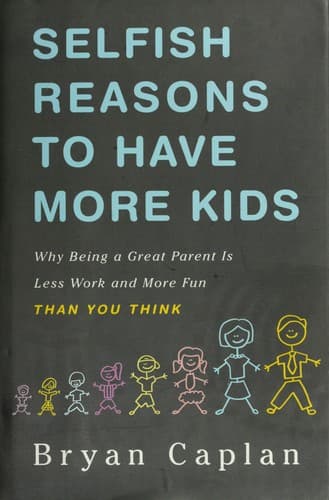
Selfish Reasons to Have More Kids
Bryan Caplan
3.8 (2200) 8 min read 6 key ideas
An economist argues, using genetics and twin studies, that parents have less influence over their children's long-term outcomes than commonly believed, and should parent more relaxedly as a result.
Key takeaways
- A Provocative Economic Argument
- What Twin Studies Actually Show
- Exhausting Effort, Limited Measurable Effect
- The Case for Relaxed Parenting
- Making More Children Feasible
- A Controversial, Carefully Bounded Argument
Action checklist
- Relax one unnecessary parenting rule today that adds stress without changing long-term outcomes
- Give yourself permission today to enjoy parenting rather than optimizing every moment
Final takeaway
The book's provocative core lesson is to consider whether some of your own parenting stress is directed toward efforts with limited actual long-term impact on your child's outcomes — not as license for neglect, but as an invitation to examine whether specific intensive efforts, causing you significant stress, are genuinely serving your child's wellbeing as much as the associated anxiety might suggest.
Ratings & Reviews
No reviews yet — be the first to share your thoughts.